



How To Play The Jaw Harp
Learn the fundamentals of playing the jaw harp, from holding the instrument correctly to producing your first clear tone. This guide walks you through the basic techniques of plucking, breathing, and shaping sound so you can begin exploring the instrument with confidence.

Step 1
Hand Placement
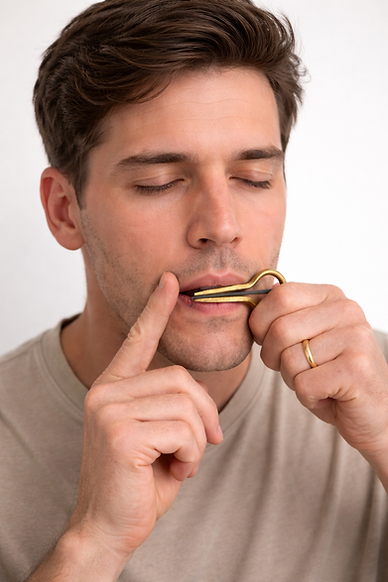
Hold the jaw harp by the frame between your thumb and index finger, keeping your grip relaxed but steady. The frame should remain stable while your other finger plucks the tongue freely to produce sound.
Step 2
Mouth Position
Place the frame of the jaw harp gently against the front edges of your upper and lower teeth, keeping your teeth slightly separated so the reed can move freely between them. Your lips should stay relaxed and out of the way while the instrument rests steadily against the teeth.

Step 3

Striking The Jaw Harp
To produce sound, gently strike the reed of the jaw harp so it vibrates freely between the frame. You can strike the reed forward or backward using your index finger, thumb, or middle finger depending on the technique you prefer. The key is to use light, controlled movements with clean, even strokes so the reed vibrates smoothly without hitting the frame. As you practice, experiment with different fingers and directions to find the motion that feels most natural and produces the clearest tone.
Step 4
Shape the Sound with Your Mouth
Once the reed is vibrating, use your mouth, tongue, and breathing to change the sound. Your mouth acts like a natural resonating chamber. Try slowly moving your tongue forward and backward, opening and closing your throat, and changing your breathing. These subtle movements will create different tones, rhythms, and overtones. You can also experiment with inhaling and exhaling while the harp is vibrating to produce a wider range of sounds and textures.


Step 5
Use Your Breath to Create Rhythm
Once you’re comfortable striking the reed and shaping the sound with your mouth, begin using your breathing to add rhythm and texture. Try gently inhaling and exhaling while the jaw harp is vibrating. This changes the airflow inside your mouth and creates pulsing, dynamic tones.
You can experiment with slow breathing for smooth, flowing sounds or short, quick breaths for rhythmic patterns. As you continue practicing, combining breath, tongue movement, and steady strikes will allow you to produce richer overtones and more musical expression.
Step 6
Explore Tongue and Mouth Shapes
Once you’re comfortable using your breath, begin experimenting with tongue and mouth shapes to create different tones and overtones. Try slowly moving your tongue as if you’re silently saying vowel sounds like “ee,” “ah,” “oh,” and “oo.”

Step 7
Develop Rhythm and Timing
Once you’re comfortable with breath and mouth shaping, begin focusing on steady rhythm. Strike the reed in a consistent pattern while maintaining smooth breathing and tongue movement.
Step 8
Have Fun and Explore!!
Now that you understand the basics, the most important step is simple: enjoy the instrument and explore its possibilities. The jaw harp is a deeply expressive instrument, and no two players sound exactly the same. Try different rhythms, breathing patterns, tongue shapes, and tempos.

Ready to choose
your first jaw harp?
Explore our collection of jaw harps
including beginner jaw harps, bass models, and more handmade instruments from makers around the world!
Subscribe to get exclusive Jaw Harp News
Join our email list and get access to specials deals exclusive to our subscribers.